
Permaculture. Fertile Soil—It’s Easy!
For most people today, fertile soil is a utopia. A purely consumer-oriented approach to growing plants destroys the fertile soil layer. Most agronomists believe that fertile soil is land with a specific chemical composition.
This notion is fundamentally incorrect, and it is precisely this misconception that leads to soil degradation. Don’t believe it? Read on.
Everyone knows that the topsoil layer is relatively thin and lies on the earth’s surface. If you dig a two-meter-deep hole in the ground, you can see with the naked eye that there is no topsoil at the bottom, although if we assume that soil fertility is determined by its chemical composition, then at that depth it should, on the contrary, be more fertile, since plants don’t reach that far.
It’s also common knowledge that for plants to develop normally, the soil in which they grow must be loose. Here, the AGRONOMISTS HAVE ONCE AGAIN LED US ASTRAY and told us that to achieve this, we need to dig it up regularly. By digging up the soil, we first turn it into earth, then sand, and finally dust. And then we all breathe it in.
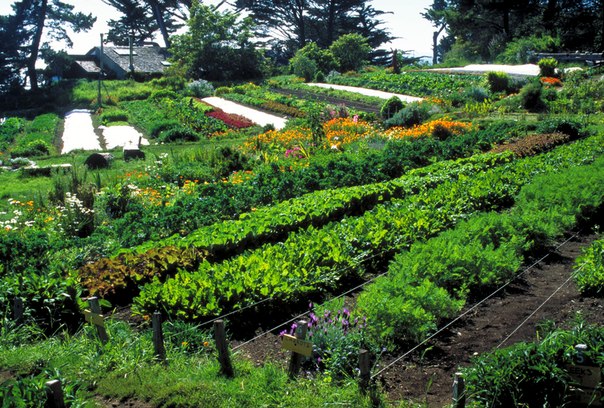
Another mistake is how we plant our crops. Different plants consume and produce different micronutrients. If different plants grow mixed together in a garden bed, they support one another and require virtually no care. But if the entire bed is filled with plants of a single species, they begin to compete with one another for a place in the sun. As a result, a lack of micronutrients leads to diseased plants. We try to treat them with chemicals—again, on the advice of agronomists—and end up in a VICIOUS CYCLE.
So, should we all go out and beat up agronomists for giving us false information? Sure, we could do that, but it won’t solve the problem. A more sensible course of action is to figure out for ourselves what determines soil fertility. It’s worth the effort—if we can mimic Nature’s behavior—after all, right now she’s the only one making the soil fertile—then we won’t have to break our backs in the garden anymore; everything will grow on its own. Sounds tempting? Let’s continue.
FERTILE SOIL IS A LIVING ORGANISM, not just a collection of chemical elements. The fact that it contains many micronutrients is a side effect of its “vitality.” To increase soil fertility, you need to increase its “vitality,” and the necessary micronutrients will come to living soil on their own. Don’t believe it? There’s no mysticism here—only the precise laws of Nature.
First, fertile soil is not the same as earth. Earth is an integral part of it, but it’s only the framework upon which the fertile layer forms.
First, let’s figure out how to make the soil loose. It’s simple—you need to plant annuals with long roots in it several times in a row. When their long roots die off, they’ll leave behind channels that will keep the soil loose.
Now let’s figure out where the micronutrients that plants need come from. There’s no problem here either—you just need to avoid leaving the garden beds bare under the scorching sun. Partially pull out the weeds and leave some behind, and toss the pulled weeds right back into the garden bed. Also, plant the plants mixed together rather than in separate beds.
That’s it—from then on, the plants and the pulled weeds will share the micronutrients among themselves. The last problem is where to get water. You’ll probably be surprised, but there’s no problem here either. All you need to do is cover the seedlings with a 15-centimeter layer of straw, leaves, or pine needles.
This layer is called MULCH. Most people who use mulch think it only retains moisture. In fact, it also produces moisture. The air temperature differs above and below the mulch; because of this difference, dew forms on the mulch, which is so essential for plants.
Dew forms not only on the mulch itself but also in the channels left by the roots of old plants; in other words, annual plants with long roots provide a double benefit.
That’s the whole secret to soil fertility. As you can see, THERE’S NOTHING COMPLICATED ABOUT IT. Creating fertile soil is so simple that it’s hard to believe—which is why we’re still searching for a “magic” fertilizer that will make our soil fertile. But the truth is, no such fertilizer exists—and it never will.
SO LET’S STOP STRUGGLING AND GIVE NATURE THE CHANCE TO RESTORE SOIL FERTILITY ON ITS OWN!